Made for: Landlords or housing providers, property managers
Length: 4 minutes and 41 seconds
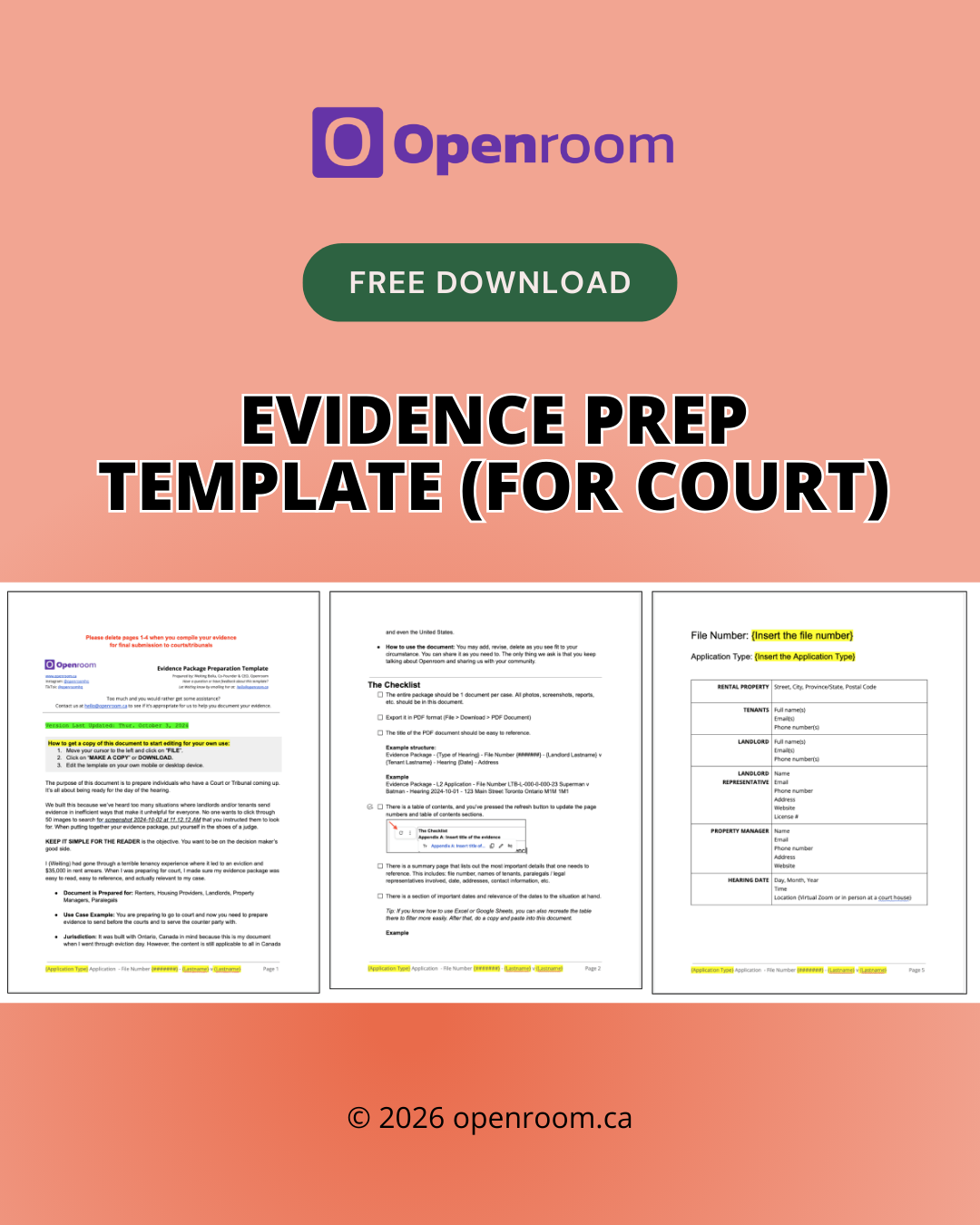
In the case you end up in court, our evidence prep template is a free resource that might be helpful for you.
Collecting rent and deposits seems simple, until you discover the Residential Tenancies Act, 2006 (RTA) has more opinions about the process than your most particular relative at Thanksgiving. Getting it wrong can lead to illegal charges, unintended tenancies, and headaches nobody ordered.
I'm Weiting - CEO and Co-Founder of Openroom. After losing $35K+ from tenants who didn't pay rent, I've spent a few thousand hours dissecting the rental compliance laws of Canada to share knowledge I wish I knew about rental housing to prevent you from repeating my mistakes.
I've spoken to thousands of housing providers and residents - one can say I'm a little more than obsessed about everything in this realm. I breathe, sleep, and dream about Openroom - the future to a transparent and connected rental ecosystem.
Here’s your landlord-friendly, RTA safe roadmap.
Under the RTA, lawful fees include:
What you can’t charge includes cleaning fees, damage deposits, pet deposits, rent prepayment, mortgage fees, late fees, or application fees.
The landlord is limited to what they can charge. However, if the landlord uses a third-party service for the application process, the tenant may be required to pay a fee to the third-party for the processing. This fee does not get paid to the landlord.
Tenants must have at least one free method to pay rent. You cannot require a rent payment method that costs the tenant money, such as a mandatory bank draft.
Acceptable options include:
The landlord also cannot require 12 post-dated cheques, even if you think it would bring you inner peace.
You may only collect deposits or rent from the legal tenant(s) named on the lease, or someone paying on their behalf. The key to success is the receipt must always be issued in the tenant’s name.
Do not collect rent from:
Even if Grandma writes the rent cheque, the receipt goes to the tenant.
Be aware, if you take money from an occupant and issue receipts in their name, or allow them to make maintenance, parking, or service requests as though they hold tenancy rights, you may inadvertently create a new, unauthorized tenancy relationship. It’s not about one payment, it’s about a pattern of treating a person like a tenant.
Be safe and only communicate with the legal tenant regarding matters of the tenant.
OK, time for our Rental trio: the top 3 takeaways for tenants and landlords alike.
Stick to what the RTA allows, document everything, and your rent collection will be lawful, clean, and drama-free.
Disclaimer: The information provided in this article is for general educational and informational purposes only and does not constitute legal, financial, or professional advice. You should consult a qualified professional regarding your specific circumstances before taking any action.
.png)



Weiting's entrepreneurial journey began with a costly lesson in rental property management, where she experienced losses exceeding $35,000 due to non-paying tenants. Determined to prevent others from facing similar challenges, she built Openroom to pave a future towards a transparent and connected rental ecosystem.
Drawing from her extensive background in software product management spanning education, telecommunications, insurance, and artificial intelligence, Weiting has become a trusted advisor to founders of venture-backed companies. Beyond the tech sphere, Weiting managed properties for over a decade and made significant contributions to community leadership. She’s served on the Board of Rotary District 7070 and chaired various organizational committees.
Weiting balances her professional endeavours with being a parent of two kids under two. Alongside thousands of other parents, she was awarded participation trophies in innovative improvisation, ever-changing expectations management, daily roadmap planning, and hardcore patience!


.png)
.png)
.png)
.png)
.png)
.png)

.png)
.png)