Made for: Landlords or housing providers, property managers
Length: 4 minutes and 48 seconds
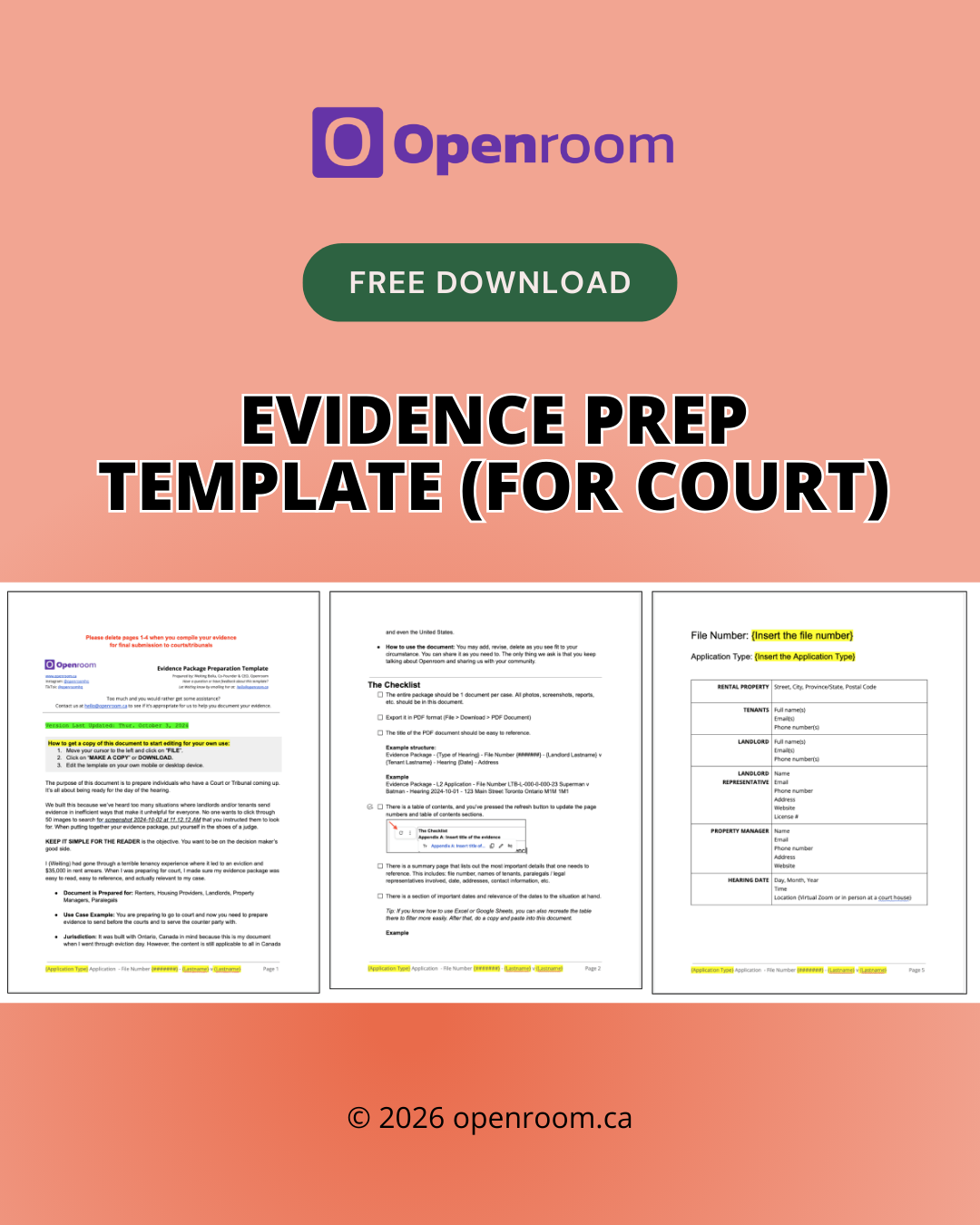
In the case you end up in court, our evidence prep template is a free resource that might be helpful for you.
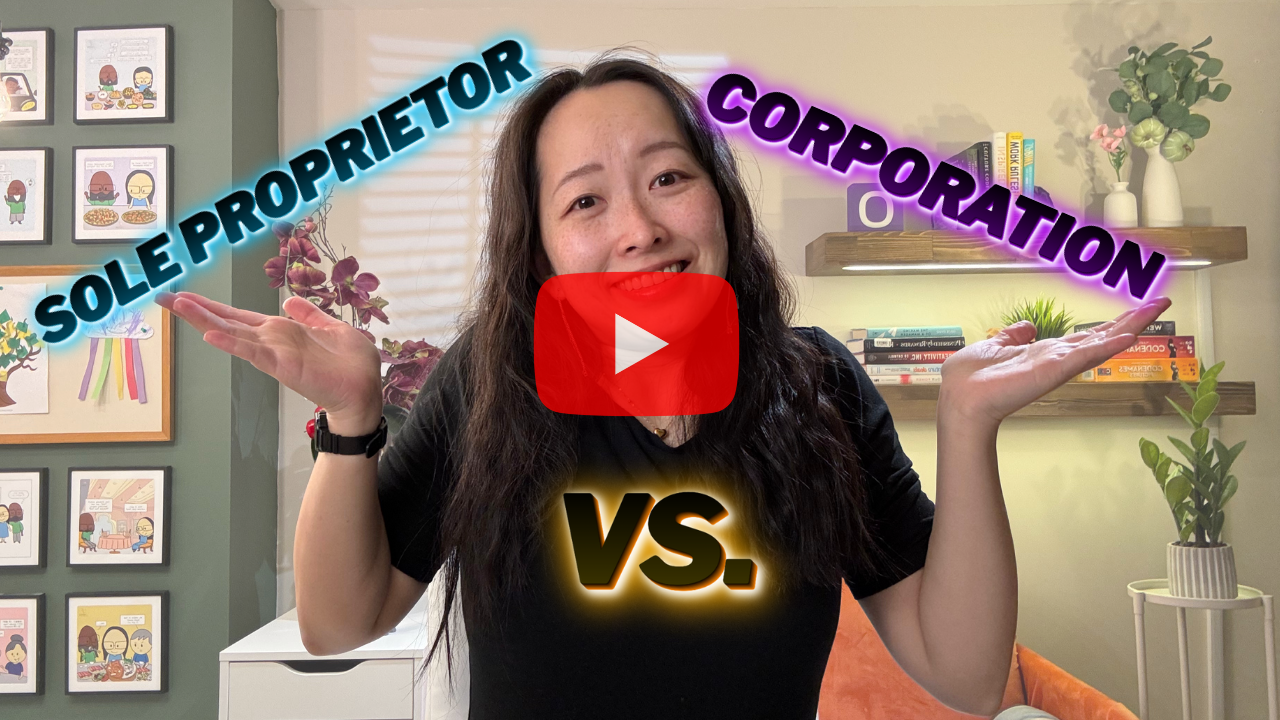
Are you a new landlord trying to figure out if you should run your rental empire as a sole proprietor or go full “big boss energy” and set up a corporation? Before you buy a stack of gold pens and pretend you’re on Dragons’ Den, let’s break down what each choice really means, with a dose of real-life landlord wisdom.
But who am I?
My name is Weiting Bollu, I was 23 when I bought my first property. I had rented it out but it turned really ugly when my tenants decided they weren’t going to pay rent anymore. $35K of unpaid rent later, I started openroom.ca where my team collects court orders related to disputes and makes it publicly searchable for half a million people each year in Canada so you can make informed decisions on who you rent to and who you rent from.
And because I’ve spent thousands of hours learning what I shouldn’t do so you don’t make the same mistakes. I share that knowledge with you through videos like this or through my monthly behind-the-scenes memos.
Alright, let’s dive in:
You and the property are legally the same person. Income flows onto your personal tax return, paperwork is light, and start-up costs are tiny. Think of it like running a small shop out of your backpack - simple, flexible, but everything you own is technically on the line.
A corporation is a whole separate legal entity. It owns the property; you own the corporation. More paperwork, more structure, more costs, but also more protection. It’s like hiring a giant bouncer named Liability Shield to stand between your personal assets and potential problems.
Sole proprietor: there is unlimited personal liability. If something goes sideways, creditors can eye your car, savings, maybe even that TV you swore you got on sale.
Corporation: Limited liability; the corporation takes the hit first. It’s not invincible, but it gives you layers, like wearing a Kevlar vest instead of a T-shirt.
Sole proprietor: Report rental income on your personal return (T776). Simple, clean, and CRA won’t send you a fruit basket, but they’ll at least know what’s going on. You can often deduct losses against other income; handy when repairs eat your wallet.
Corporation: Adds tax planning opportunities and lets you keep profits inside the company for future growth. But brace yourself for corporate filings, bookkeeping, payroll, dividends - because you’re running a company!
At the Landlord and Tenant Board (LTB), the name on your notices matters.
It’s like showing up to court with the wrong ID, trust me - nobody’s going to be impressed.
GST/HST, municipal licensing, insurance, CRA and many other agencies that will say PEEK A BOO; they all care deeply who the landlord actually is. Corporations often face more reporting responsibilities and sole proprietors get simplicity but less protection.
Disclaimer: The information provided in this article is for general educational and informational purposes only and does not constitute legal, financial, or professional advice. You should consult a qualified professional regarding your specific circumstances before taking any action.
.png)



Weiting's entrepreneurial journey began with a costly lesson in rental property management, where she experienced losses exceeding $35,000 due to non-paying tenants. Determined to prevent others from facing similar challenges, she built Openroom to pave a future towards a transparent and connected rental ecosystem.
Drawing from her extensive background in software product management spanning education, telecommunications, insurance, and artificial intelligence, Weiting has become a trusted advisor to founders of venture-backed companies. Beyond the tech sphere, Weiting managed properties for over a decade and made significant contributions to community leadership. She’s served on the Board of Rotary District 7070 and chaired various organizational committees.
Weiting balances her professional endeavours with being a parent of two kids under two. Alongside thousands of other parents, she was awarded participation trophies in innovative improvisation, ever-changing expectations management, daily roadmap planning, and hardcore patience!


.png)
.png)

.png)
.png)
.png)
.png)

.png)
.png)