.png)
Made for: Housing Provider
Length: 20 minutes and 13 seconds
Flash back to when I was 23. I’d just bought my first property. I was pumped, I was proud, and I thought I was building wealth. Hooray.
And I had no idea what I was walking into. Turns out, buying a house also means stepping into this massive, regulated legal machine. And I barely understood any of it. I had no idea how close I was to losing everything.
By the time I got through it, I’d lost over $35,000 in unpaid rent and legal fees. I was 30 weeks pregnant during the eviction. I was shoveling literal dog sh*t out of the unit. And that really sucked — but besides the money, the stress was actually worse. The exhaustion really broke me. Just the endless waiting, the not knowing, and the feeling of being totally helpless while my own money was draining away.
And look, I grew up watching my parents fight for everything. My family immigrated to Canada in 2000. My parents spoke almost no English, worked odd jobs, and pushed me around in a second-hand white trolley through the snow just to visit friends. We lived in a roach-infested apartment at 210 Oak Street in Toronto. Roaches on the toothbrushes. Roaches on the dishes. So property ownership? That meant something deep to me. That property meant everything to my family.
And I still lost $35,000. So today, I want to talk about what I wish I knew back then.
If you’re thinking about buying a rental property in Canada — or honestly, if you just bought one — I need you to pay attention. Because I’ve now worked with thousands of housing providers through my company Openroom, and the same six things keep blindsiding people. Over and over again.
Everybody talks about finding the right deal, getting financing. That stuff matters. But the legal traps, the hidden debts, the things buried in the system that will cost you thousands — or potentially everything you own — nobody talks about those. And you need to know about them before you buy.
So today, I’m going to walk you through all six. Starting with a hidden debt that can transfer to you at closing — even if you never created it. Then I’ll show you how one paperwork mistake can let a bad tenant come after your personal home and savings. And later, I’m going to explain how you can buy a property and inherit a tenant you never chose — someone who’s legally protected from eviction. That one is wild.
Alright. Let’s dive in.
There are debts attached to the property that will become your problem the moment you sign the closing papers. Even if you didn’t create them. Even if you’ve never met the person who did.
I’m talking about utility debts. And specifically, in Ontario, under the Municipal Act and something called Ontario Regulation 581/06 — which is basically a rule that says municipalities can move unpaid water, gas, and sewage charges onto the property’s tax roll.
So what does that mean in plain English? It means if the previous owner’s tenant ran up a massive water bill and never paid it, the city doesn’t chase the tenant. They put the debt on the property. And now it’s sitting there waiting for you, the new buyer, to deal with it.
And it gets ugly fast. In Toronto, they add a 1.25% monthly penalty on top of the balance plus an approximate $50 fee. That adds up. And if you don’t pay? The city can eventually trigger a tax sale of your home. Your home. For someone else’s water bill.
I know, I know — that sounds extreme. But I’ve seen it happen. And the worst part is, you can’t really force the city to go after the tenant for it. In places like Toronto and Hamilton, the debt sticks to the property. Full stop.
Here’s what you do. Before you close on any property, you request something called a Water Certificate from the municipality. It’s a document that shows any unpaid water or utility balances on the property. That’s it. One document. And it could save you thousands.
I’m scoping this to Ontario because I know the rules here, but the principle of inherited utility debt shows up in other provinces too. So wherever you are, ask your lawyer about it before you close. It’s the simplest, cheapest protection you can take — and almost nobody does it.
And that’s what really gets me. This is step one. Before a single tenant moves in, before you’ve even turned the key. And most people have no idea.
But hidden debts are only one piece. Because the next thing that can go wrong — and this one is really scary — is how your entire business is structured. And if you get this wrong, a bad tenant doesn’t just cost you a property. They can come after everything you personally own.
Alright. This next one I see constantly. And I want you to really hear it.
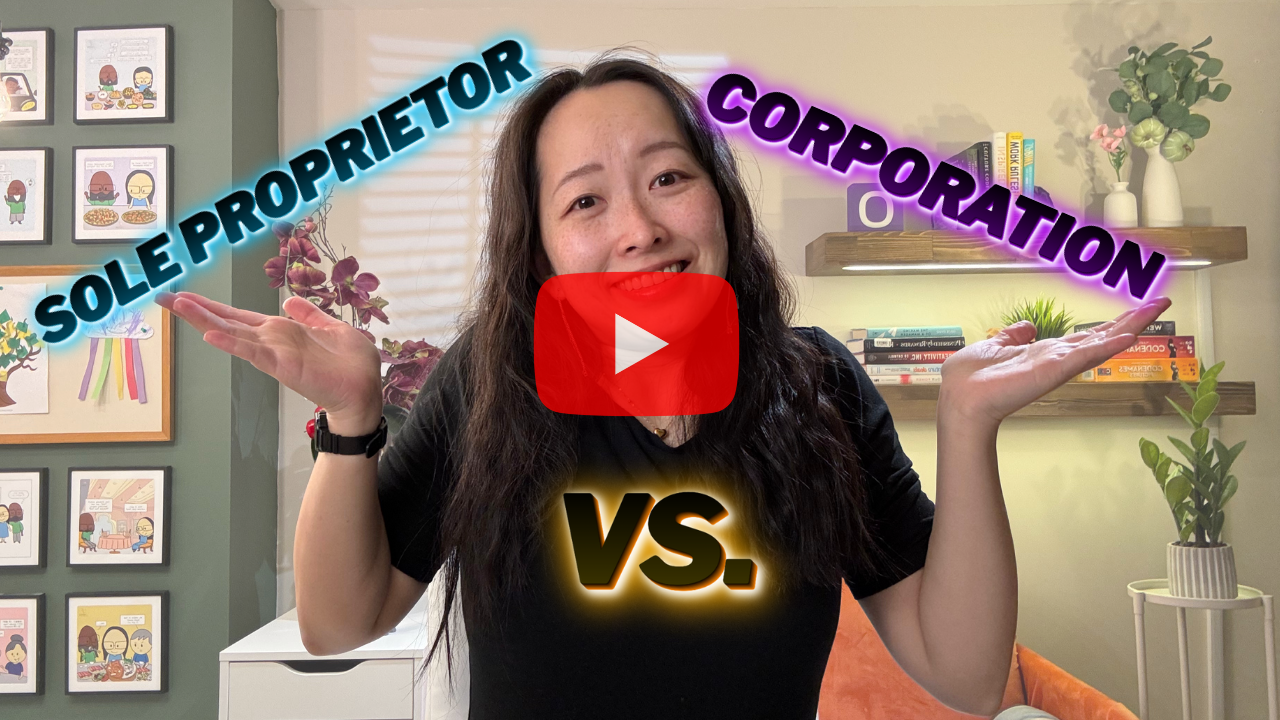
When you buy a rental property, you have to decide how you’re going to own it. And there are basically two paths. I like to think of it as the Backpack versus the Bouncer.
Path one is a sole proprietorship — that’s the Backpack. It’s simple. It’s cheap. You and the business are the same thing. Like, you’re just running a shop out of a backpack. Easy to set up, no corporate paperwork. The catch is you have unlimited personal liability. If a tenant sues you, or you get hit with a massive judgment, creditors can come after your personal car, your savings, your home. Everything.
Path two is a corporation — that’s the Bouncer. A corporation is a separate legal entity. Think of it like having a giant bouncer named Liability Shield standing between you and the business. It costs more to set up, it needs proper bookkeeping — payroll, dividends, all that stuff. But if something goes wrong, the bouncer takes the hit. Not you.
Now, I’m not saying everyone should incorporate. That’s not what most people want to do, and it’s not always the best route. It’s a choice with trade-offs. But you need to understand the stakes before you buy. Because if you go the sole proprietorship route and things go sideways, there’s no shield between your rental property problems and your personal life. It’s like wearing a t-shirt to a paintball fight when you could’ve had a Kevlar vest.
Even if you do incorporate, there’s a paperwork trap that can undo all of that protection in a second.
It’s called the Name Game. And I see this one all the time.
If your property is owned by a corporation — let’s say "My Rentals Inc." — but you put your personal name on the lease or on the legal notices you file, your entire case gets thrown out. Like, everything you filed? Gone. Months of work, wasted. Because the name on the paperwork didn’t match the legal owner of the property.
And it goes the other way too. If you call yourself "The Landlord" on the paperwork, but the property is actually owned by "123456 Ontario Inc.", that’s also wrong. It’s like showing up to court with someone else’s ID. They will send you home.
And this isn’t just an Ontario thing. I believe this applies anywhere in Canada. If the name on the paperwork doesn’t match the legal owner, you’re in trouble.
So before you buy, figure out your structure. And once you do, make sure every single piece of paperwork — the lease, the notices, the filings — has the exact right name on it. Not your name. Not a nickname. The legal entity name.
So that’s the structure piece. And it’s huge. But the next thing I need to tell you about is something most buyers have never even heard of. I know, I know — you’d think buying a property means you choose who lives in it. But that’s not always how this works. Because you can actually buy a place and discover that someone is already living in it — as a legally protected tenant you never agreed to.
Alright, so this one is wild. And it’s becoming more and more common because of what’s happening in the condo market right now.
So picture this. Someone buys a pre-construction condo. You know, one of those units that’s still being built. They put down their deposit, they sign the purchase agreement, and eventually the building is done enough that the developer lets them move in. This period is called interim occupancy. They’re paying fees to the developer, they’re living there, but they haven’t actually closed on the mortgage yet.
And then interest rates spike. Which, if you’ve been paying attention to the last couple years, you know exactly what I’m talking about. Suddenly this buyer can’t get approved for the mortgage anymore. The purchase agreement falls through.
And that person doesn’t just pack up and leave. Because under the law, once they’ve been living there during interim occupancy and the deal falls apart, they’re now treated as a tenant. A tenant protected by the Residential Tenancies Act — which is the law that governs landlord-tenant relationships in Ontario.
The developer — or whoever buys that unit next — cannot just change the locks and kick them out. They have to go through the full eviction process at the Landlord and Tenant Board. File a Form N8. Wait months. And in the meantime, this person who was supposed to be a buyer is now a tenant that nobody chose, nobody screened, and nobody planned for.
You become an accidental landlord to a failed purchaser. And the legal process to deal with it is slow.
I’m telling you this because nobody prepares you for it. And it’s not just condos. For any property you’re buying — any property — you should verify who is physically occupying the unit and under what legal arrangement before you sign anything. A property that looks "vacant" on paper might have a sitting tenant with full legal protection. Your real estate lawyer should confirm occupancy status, but most buyers never even think to ask.
So ask. Before you close. Because finding out after is a nightmare you don’t want.
And look, even if you buy a property with no tenants, eventually you’re going to rent it out. That’s the whole point. So the next thing you need to know is what happens when a tenant stops paying rent. Because that process will eat you alive if you’re not ready for it.
So this is the one that hit me the hardest personally. And I know it hits every landlord the same way because I’ve heard thousands of them tell me the same story.
A tenant stops paying rent. And your first instinct — because you’re a decent person — is to wait. Give them a chance. Be understanding. I did the same thing. I waited weeks. I thought being patient was the right call.
It wasn’t. It was the most expensive mistake I could’ve made.
So here’s what you need to know. In Ontario, if rent is due on the 1st, it’s officially late on the 2nd. Day 2. And on Day 2, you can issue something called an N4 notice — which is the formal notice of non-payment that starts the entire legal process.
I’m not saying do this because you’re heartless. I’m saying do this because the legal process is agonizingly slow and every single day you wait is a day the system works against you. By the time you file, wait for a hearing, actually get in front of someone at the Landlord and Tenant Board, you could be looking at months. Months with no rent coming in while your mortgage keeps going out.
So you start the clock immediately. Not out of malice. Out of survival. Most new landlords wait weeks or months because they feel bad. And by then, a professional tenant has already dug in.
And yeah, I said professional tenant. Because that’s a real thing.
CBC did a story on a couple who owed nearly $100,000 to four different landlords. Four. These people knew the system better than the landlords did. They used delays, stays of eviction, fake disputes — every trick available — to live rent-free for years. They just moved from property to property, doing the exact same thing each time.
And that’s what new buyers don’t understand. You think "that won’t happen to me." I thought the same thing. Every landlord who gets burned thought the same thing.
This is why, before you ever rent to anyone, you check their court history. Through Openroom, we’ve crowdsourced over 55,000 court orders. You can search a name and see if they’ve been through the system before. Credit reports miss this stuff entirely. But court orders don’t lie.
So, two rules. Start the clock on Day 2. And screen like your financial future depends on it. Because it does.
Now. This next one makes a lot of first-time buyers really uncomfortable. Because you’d think your lease would protect you from a lot of this. You’d think, "Well, I’ll just write strong clauses and cover myself." And I wish that were true. But some of the clauses you think are protecting you? They’re legally worthless.
So this surprises basically every new landlord I talk to.
In Ontario, if you put a "No Pets" clause in your lease, it’s void. Like, legally unenforceable. Doesn’t matter if the tenant signed it. Doesn’t matter if they agreed to it verbally. Section 14 of the Residential Tenancies Act says that clause means nothing.
The only time you can actually take action on a pet is if it’s dangerous, if it’s causing severe allergic reactions for someone in a shared ventilation system, or if it’s substantially interfering with other tenants’ reasonable enjoyment. Like, we’re talking incessant barking at 3 AM, not just "I don’t want a cat in my unit."
Now this is interesting — because in BC and Alberta, landlords actually can restrict pets. BC lets you charge a pet damage deposit, up to half a month’s rent. Alberta lets you refuse pets entirely or set breed and size rules. So the rules are different depending on where you are in Canada. But in Ontario? Your "No Pets" clause is paper thin.
And this is the bigger lesson. New buyers often treat their lease like it’s a shield. They think, "I’ve got everything in writing, I’m covered." But in reality, a lot of those clauses are legally meaningless under the RTA. And that false sense of security is exactly what gets people in trouble.
So when things go really sideways — like, you’ve got a tenant who isn’t paying, and the eviction process is dragging on for months — there’s a move that sounds crazy but sometimes makes a lot of sense.
It’s called Cash for Keys. And yeah, it’s exactly what it sounds like. You pay the tenant to leave.
I know, I know — you think it’s extortion! But you know what, take emotion out of it — it’s just business. Sometimes it is genuinely cheaper to pay a tenant $2,000 or $3,000 to leave than to keep losing rent for six more months while the Board sorts it out.
And this part is important. You always — always — sign an N11 first. That’s the Agreement to End Tenancy form. And the money only changes hands when they give you vacant possession. Keys in hand. Unit empty. Never pay upfront. Never.
Because if you pay upfront and they don’t leave? You just lost even more money on top of everything else. Don’t do it. The money only changes hands at vacant possession.
So that’s the reality of how the legal system actually works for landlords. And I know this all sounds heavy. Trust me, I’ve lived through the worst of it. But there is actually good news here. Because the landlords who do well — the ones who don’t get blindsided — they build their protections before the first tenant moves in. And the tools to do it are either free or really affordable.
Alright. So after everything I just walked you through — hidden debts, structural risk, surprise tenants, the eviction machine, clauses that don’t work — you’re probably thinking, "Okay Weiting, so how do I actually protect myself?"
And this is the part where I get excited. Because this is why I built Openroom in the first place.
My hope is that every landlord in Canada starts building their protection stack before the first rent check is due. Not after something goes wrong. Before.
So here’s what that looks like.
Step one. Before you screen a single tenant, search their name on Openroom. We’ve crowdsourced over 55,000 court orders from the Landlord and Tenant Board. You type in a name, and you can see if that person has eviction history, outstanding debts, or has been through the system multiple times.
Credit reports are fine. But they miss a ton. Someone can have a clean credit score and still have a trail of eviction orders behind them. Court orders don’t show up on a standard credit pull. Openroom fills that gap.
And by the way — we’re now a government-certified Consumer Reporting Agency. So this isn’t just a website. Landlords can report debts, and tenants can now report landlords who owe them money too — like bad faith eviction compensation. It goes both ways. Which is exactly how it should be.
Step two. And this one — I think this is the real gold. We have free, copy-and-pasteable lease clause content on our website at learn.openroom.ca/post/rent-reporting-lease-clauses. And I’m telling you, people find this extremely helpful.
What these clauses do is they bake rent-reporting into your lease from day one. So tenants who pay on time? They build credit. That’s a huge incentive for them. Tenants who don’t pay? It shows up on their credit profile. And what we know from working with thousands of housing providers is that sometimes a lien on a property takes a while to matter. Some landlords are actually okay with it. But what tenants care about — what actually motivates them to settle — is the impact on their credit score and credit profile. That’s the lever.
So when you include these clauses in your lease from the start, you’re creating a built-in accountability system. You’re aligning incentives before anything goes wrong. And you’re giving yourself an actual tool — not a fake clause that gets thrown out.
Look. I know this video was a lot. And I know some of it was scary. I wish someone had sat me down and told me all of this before I bought my first property. It would’ve saved me $35,000. It would’ve saved me a year of stress. And honestly, it probably would’ve saved my mental health during one of the hardest times of my life.
I learned all of this through sweat, tears, trial, and — LOTS — of error. My goal here is to share everything I’ve learned so you don’t have to go through the same mess I did.
Because despite all the horror stories I just shared — and trust me, I could share more — you absolutely can build generational wealth and take care of your family doing this. I still believe that 100%. You just have to be smart enough to learn the system before the system teaches you the hard way.
So. If you found this helpful, subscribe. I put out content like this every week to help housing providers in Canada protect themselves. And if you want to check court orders on a potential tenant, or you want those free lease clauses, head to Openroom.ca. I’ll drop the links in the description.
You got this.
Disclaimer: The information provided in this article is for general educational and informational purposes only and does not constitute legal, financial, or professional advice. You should consult a qualified professional regarding your specific circumstances before taking any action.
.png)



Weiting's entrepreneurial journey began with a costly lesson in rental property management, where she experienced losses exceeding $35,000 due to non-paying tenants. Determined to prevent others from facing similar challenges, she built Openroom to pave a future towards a transparent and connected rental ecosystem.
Drawing from her extensive background in software product management spanning education, telecommunications, insurance, and artificial intelligence, Weiting has become a trusted advisor to founders of venture-backed companies. Beyond the tech sphere, Weiting managed properties for over a decade and made significant contributions to community leadership. She’s served on the Board of Rotary District 7070 and chaired various organizational committees.
Weiting balances her professional endeavours with being a parent of two kids under two. Alongside thousands of other parents, she was awarded participation trophies in innovative improvisation, ever-changing expectations management, daily roadmap planning, and hardcore patience!


.png)
.png)
.png)
.png)

.png)
.png)